2026 10th International Conference on Intelligent Computing, Communication and Network Technology
Session Keynote Lecturers
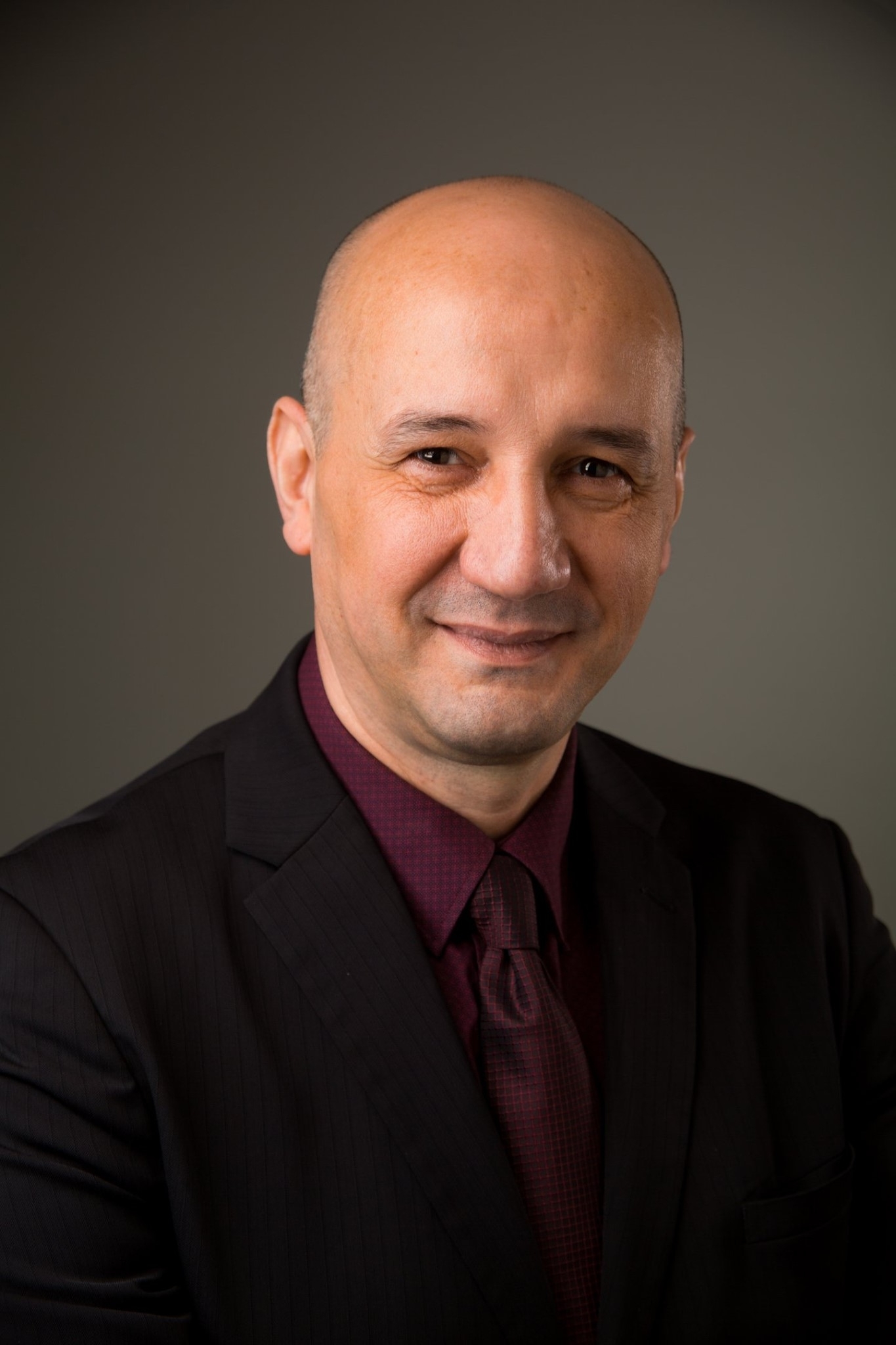
Prof. Farid Naït-Abdesselam
Université
Paris Cité, France
Speech Title: Securing Mobile Platforms Against Intelligent Malware: Emerging Threats and Future Directions
Abstract: The widespread adoption of smartphones and mobile applications has made mobile platforms an essential part of today’s digital ecosystem, while also turning them into attractive targets for increasingly sophisticated malware. Machine learning has emerged as a powerful approach for detecting and classifying such threats at scale. Yet, the growing reliance on learning-based detectors has introduced new vulnerabilities, as adversaries increasingly seek to manipulate both the detection process and the data on which these systems rely.
This keynote explores the evolving landscape of mobile malware detection under intelligent and adaptive adversaries. It presents advances in learning-based detection and robust malware representation, and examines emerging threats ranging from adversarial evasion and data poisoning to AI-assisted malware manipulation. Particular attention is given to the growing role of large language models and generative AI in enabling more automated, adaptive, and stealthy attacks.
The talk also discusses defense mechanisms for improving the robustness of learning-based detectors and concludes with open challenges and future research directions toward resilient and trustworthy security solutions for next-generation mobile platforms.
Biography: Farid Naït-Abdesselam is a Full Professor of Computer Science at Université Paris Cité. His research lies at the intersection of networking, cybersecurity, and distributed systems, with a particular focus on secure communication systems, network resilience and optimization, intrusion and malware detection, adversary-aware machine learning, and adaptive defense strategies. His work addresses the design of robust and trustworthy mechanisms for securing complex, constrained, and heterogeneous networked environments.
He has authored over 180 peer-reviewed publications, edited two scientific books, and contributed several book chapters on topics including network security, malware forensics, blockchain technologies, and advanced networked systems. His research combines theoretical foundations with the design, implementation, and experimental evaluation of practical security solutions, with applications spanning mobile and wireless systems, vehicular and drone networks, sensor networks, distributed infrastructures, and emerging Internet architectures. His recent research interests include intelligent and adaptive cyber threats, adversarial machine learning, AI-assisted malware analysis, and resilient defense mechanisms for next-generation networked systems.
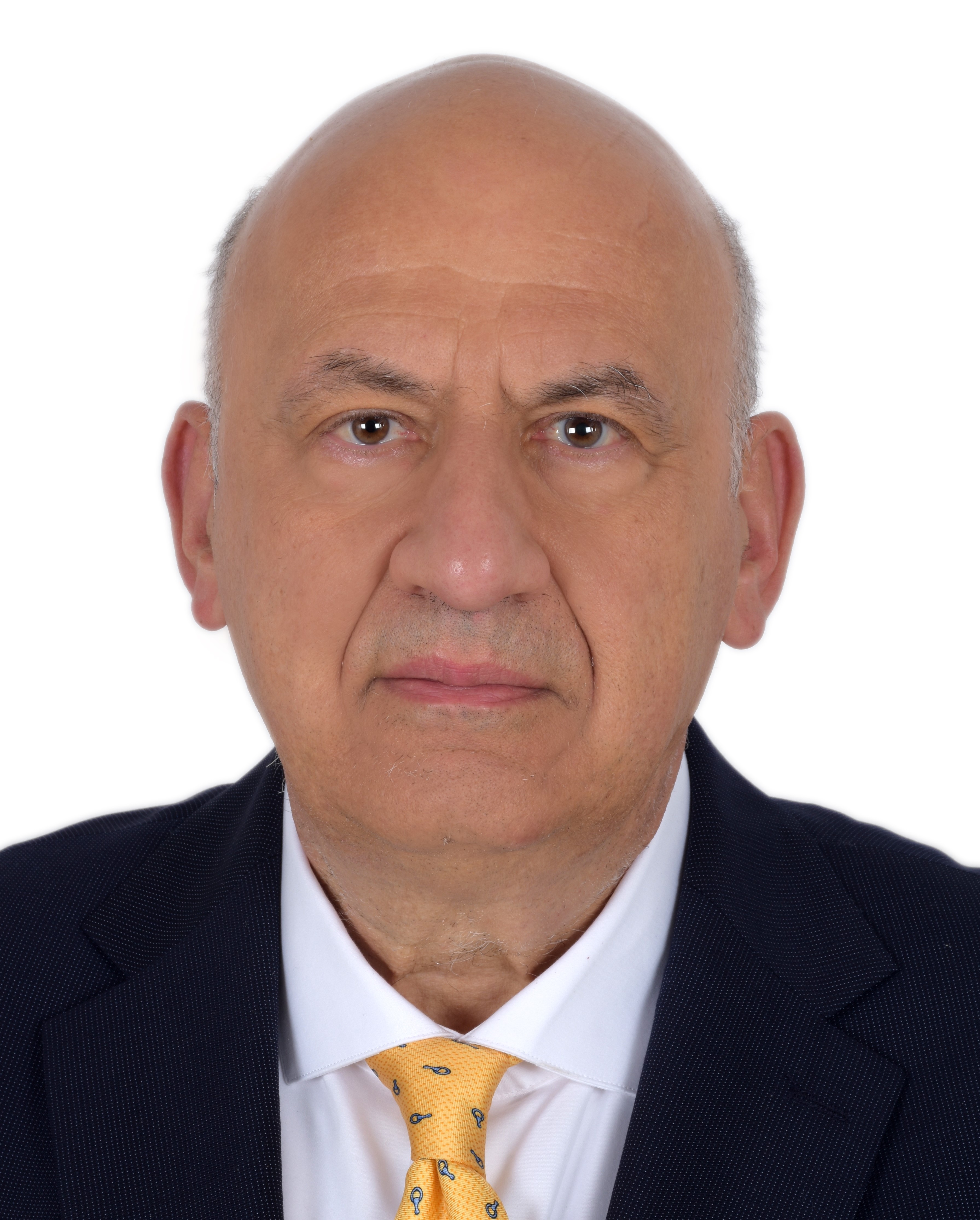
Prof. P. Takis Mathiopoulos
University of Athens, Greece
Speech Title: Channel Modeling for Space-Aerial-Terrestrial Integrated Networks
Abstract: With the development of communication technologies, space-aerial-terrestrial (SAT) heterogeneous networks have emerged in the context of 6th-Generation (6G) communications. Incorporating various communication systems and devices, such as satellites and unmanned aerial vehicles (UAVs), they operate via complex and diverse communication links, which require accurate channel models. In this presentation we first review the developments and requirements of these communication links by focusing on the current state of research and challenges in channel modeling between such heterogeneous networks. To unify these methods, a general channel modeling approach is proposed by considering a SAT integrated network (SATIN). By introducing fictitious reference points at an altitude level of approximately 8km above the ground, SAT channels can be divided into upper- and lower-level channels. The advantage of this approach is that each channel can be modeled using different methods, while the complete channel impulse response can be obtained by convolving known data for the two channels thus allowing flexible utilization of existing channel models. Through a case study it will be shown that, by taking the measured path loss as a reference, the path loss generated by the proposed approach is more accurate than that obtained from the standard channel models.
Biography: P. Takis Mathiopoulos received the Ph.D. degree in digital communications from the University of Ottawa, Ottawa, Canada, in 1989. From 1982 to 1986, he was with Raytheon Canada Ltd., working in the areas of air navigational and satellite communications.
In 1989, he joined the Department of Electrical and Computer Engineering (ECE), University of British Columbia (UBC), Vancouver, Canada, as an Assistant Professor and where he was a faculty member until 2003, holding the rank of Professor from 2000 to 2003. From 2000 to 2014, he was the Director (2000 - 2004) and then the Director of Research of the Institute for Space Applications and Remote Sensing (ISARS), National Observatory of Athens (NOA). Since 2014, he is Professor of Telecommunications at the Department of Informatics and Telecommunications, National and Kapodistrian University of Athens, Athens, Greece. He also held visiting faculty long term honorary academic appointments as Guest Professor at Southwest Jiao Tong University (SWJTU), Chengdu, China, and Guest (Global) Professor at Keio University, Tokyo, Japan.
His research activities and contributions have dealt with wireless terrestrial and satellite communication systems and network as well as in remote sensing, LiDAR systems, and information technology, including blockchain systems. In these areas, he has coauthored some 160 journal papers published mainly in various IEEE journals, 1 book (edited), 5 book chapters, and more than 180 international conference papers. Dr. Mathiopoulos has been or currently serves on the editorial board of several archival journals, including the IET Communications as an Area Editor, the IEEE Transactions on Communications, the Remote Sensing Journal, and as Specialty Chief Editor for the Arial and Space Network Journal of Frontiers.
From 2001 to 2014, he has served as a Greek Representative to high-level committees in the European Commission and the European Space Agency. He has been a member of the Technical Program Committees (TPC) for numerous IEEE and other international conferences and has served as TPC Vice Chair of several IEEE conferences. He has delivered numerous invited presentations, including plenary and keynote lectures, and has taught many short courses all over the world. As a faculty member UBC, he has been awarded an Advanced Systems Institute (ASI) Fellowship as well as a Killam Research Fellowship. He is also the co-recipient of three best international IEEE conference paper awards and has received by the IEEE Communication Society the Satellite and Space Communication Technical Committee “2017 Distinguished Service Award” for outstanding contributions in the field of Satellite and Space Communications.

Prof. Brigitte Jaumard
Concordia University, Canada
Speech Title: On the complementarity between large-scale optimization and reinforcement learning Case study: Segment Routing in Optical Networks
Abstract: Over the past decades, the combination of hardware and algorithmic improvements yielded massive speed-ups inlarge scale optimization. On the other hand, machine learning (ML), and in particular Reinforcement Learning,has taken an amazing journey in the last decade. While large scale optimization and mathematicalprogramming algorithms excel at exploiting models, reinforcement learning performs well in model prediction.Then, how can they help each other solving dynamic large scale problems?Mathematical programming and reinforcement learning serve different purposes in optimization. Mathematicalprogramming is a traditional approach that uses mathematical equations to model and solve optimizationproblems. It is often used for problems with well-defined objectives and constraints. Reinforcement learning, onthe other hand, is a more dynamic and adaptive approach that uses trial and error to learn and improve overtime. It is particularly useful for problems with complex, non-linear objectives and where the environment is notfully known. In terms of how they can help each other, mathematical programming can provide the theoreticalframework and constraints for reinforcement learning to operate within. Reinforcement learning can then use this framework to learn and improve decision-making processes, potentially leading to more efficient and effective solutions to optimization problems. In other words, the combination of these two approaches can leadto more robust and scalable optimization solutions that can handle the complexities of real-world problems.We will explore this new paradigm combining mathematical programming and reinforcement learning. We willillustrate it with segment routing in optical networks, which is now widespread thanks to a simplified controlplane and increased scalability to meet the evolving traffic needs of 6G and beyond.
Biography: Brigitte Jaumard is a professor in the Computer Science and Software Engineering (CSE) Department at Concordia University. Her research focuses on mathematical modeling and algorithm design (large-scale optimization and machine learning) for problems arising in communication networks, transportation and logistics networks.
Recent studies include the design of efficient optimization/machine learning algorithms for network design, dimensioning and provisioning, scheduling in edge-computing and clouds, and 5G networks. During her 2020-2021 sabbatical year, she was a senior advisor for the Montreal Ericsson GAIA (Global Artificial Intelligence Accelerator) research center and a research lead with Ciena. She was the chief scientist of CRIM during 2019-2021, and then the first scientific director of Confiance IA in 2024.
She was awarded several research chairs (Canada Research Chair and Concordia Research Chair, both Tier I during the years 2000-2019). B. Jaumard has published over 400 papers in international journals in Optimization, Machine Learning and in Telecommunications.

Prof. Anand Nayyar
Duy Tan University, Vietnam
Speech Title: Cyber-Physical Systems as the Foundation of Industry 5.0: Enabling Human-Centric, Resilient, and Sustainable Smart Manufacturing
Abstract: Cyber-Physical Systems (CPS) play a crucial role in the transformation from Industry 4.0 to Industry 5.0 by integrating computation, communication, sensing, and physical processes into intelligent industrial environments. While Industry 4.0 emphasizes automation, connectivity, and data-driven production, Industry 5.0 extends these capabilities by focusing on human-centricity, sustainability, and resilience. This study explores how CPS enables the development of adaptive, collaborative, and intelligent manufacturing systems that support effective human–machine interaction and real-time decision-making. By connecting machines, sensors, digital platforms, and human operators, CPS provides the technological foundation for flexible production, predictive maintenance, resource optimization, and personalized manufacturing. The paper also discusses the opportunities and challenges associated with CPS adoption in Industry 5.0, including cybersecurity, interoperability, data governance, system complexity, and workforce readiness. The findings highlight that CPS is not only a technical enabler but also a strategic driver for building future industrial systems that are more efficient, sustainable, resilient, and aligned with human values.
Biography: Dr. Anand Nayyar received Ph.D (Computer Science) from Desh Bhagat University in 2017 in the area of Wireless Sensor Networks, Swarm Intelligence and Network Simulation. He is currently working in School of Computer Science-Duy Tan University, Da Nang, Vietnam as Professor, Scientist, Vice-Chairman (Research) and Director- IoT and Intelligent Systems Lab. A Certified Professional with 280+ Professional certifications from CISCO, Microsoft, CompTIA, Amazon, Alibaba Cloud, Oracle, Google, Salesforce, Tableau, FinOps, Beingcert, EXIN, GAQM, Cyberoam and many more. Published more than 300+ Research Papers in various High-Quality ISI-SCI/SCIE/SSCI Impact Factor- Q1, Q2, Q3, Q4 Journals cum Scopus/ESCI indexed Journals, 80+ Papers in International Conferences indexed with Springer, IEEE and ACM Digital Library, 60+ Book Chapters in various SCOPUS/WEB OF SCIENCE Indexed Books with Springer, CRC Press, Wiley, IET, Elsevier with Citations: (Google Scholar): 23000+, H-Index: 77 and I-Index: 311; (Scopus): 12700+; H-index: 60. Member of more than 60+ Associations as Senior and Life Member like: IEEE (Senior Member) and ACM (Senior Member). He has authored/co-authored cum Edited 70+ Books of Computer Science. Associated with more than 600+ International Conferences as Programme Committee/Chair/Advisory Board/Review Board member. He has completed 1 Grassroot and 1 ASEAN Project. He has 18 Australian Patents, 16 German Patents, 4 Japanese Patents, 44 Indian Design cum Utility Patents, 13 UK Patents, 1 USA Patent, 3 Indian Copyrights and 2 Canadian Copyrights to his credit in the area of Wireless Communications, Artificial Intelligence, Cloud Computing, IoT, Healthcare, Drones, Robotics and Image Processing. He has guided more than 200+ Undergraduate Students (B.S. Degree), 30 MCA, 7 M.S. Students and completed 1 Ph.D Student and currently 3 Ph.D Scholars are working under him. He has completed 4 Research Grants Projects including 1 ASEAN and 1 Glocal 30 Project and 1 Grassroot Project in DTU. Awarded 56 Awards for Teaching and Research—Young Scientist, Best Scientist, Best Senior Scientist, Asia Top 50 Academicians and Researchers, Young Researcher Award, Outstanding Researcher Award, Excellence in Teaching, Best Senior Scientist Award, DTU Best Professor and Researcher Award- 2019, 2020-2021, 2022, 2022-2023, 2023-2024, Distinguished Scientist Award by National University of Singapore, Obada Prize 2023, Lifetime Achievement Award 2023, 2024; Asian Admirable Achievers 2024; Distinguished Academic Leader 2024, Lifetime Achievement Award 2024 and many more.
He is listed in Top 2% Scientists as per Stanford University (2020, 2021, 2022, 2023, 2024, 2025), Ad Index (Rank No:1 Duy Tan University, Rank No:2 Computer Science in Viet Nam) and Listed on Research.com (Top Scientist of Computer Science in Viet Nam- National Ranking: 2; D-Index: 56; World Ranking: 3694).
He is acting as Associate Editor for Computer Communications (Elsevier), International Journal of Sensor Networks (IJSNET) (Inderscience), Tech Science Press- IASC, Cogent Engineering, Human Centric Computing and Information Sciences (HCIS), IEEE Transactions on Artificial Intelligence (IEEE TAI), Indonesian Journal of Electrical Engineering and Computer Science, IJFC, IJISP, IJDST, IJCINI, IJGC, IJSIR, IJBDCN, IJNR, IJSI, IJIES. He is acting as Managing Editor of IGI-Global Journal, USA titled “International Journal of Knowledge and Systems Science (IJKSS)”. He has reviewed more than 5700+ Articles for diverse Web of Science and Scopus Indexed Journals. He is currently researching in the area of Wireless Sensor Networks, Internet of Things, Swarm Intelligence, Cloud Computing, Artificial Intelligence, Drones, Blockchain, Cyber Security, Healthcare Informatics, Big Data and Wireless Communications.
Prof. Loc Nguyen
Loc Nguyen's Academic Network, Vietnam
Speech Title: Is matrix neural network the alternative of convolutional neural network?
Abstract: Currently, deep learning is the most important and popular methodology in artificial intelligence (AI) and artificial neural network (ANN) is the foundation of deep learning. The main drawback of ANN is the boom problem of a huge number of parametric weights when ANN in deep learning establishes a large number of hidden layers. The excellent solution for image processing within context of deep learning is convolutional neural network (CNN) equipped filtering kernel. Another solution of the boom problem is that large parametric weight vector is organized as matrix, which leads to a so-called matrix neural network (MNN). Computation cost of MNN is decreased significantly in comparison with ANN but it is necessary to test the main hypothesis “whether MNN is the alternative of CNN”. Moreover, transformer which is the new trend in AI and deep learning, which aims to improve/replace traditional ANN by self-supervised learning, in which attention is the significant mechanism of self-supervised learning. Therefore, the implicit deep meanings of attention and filtering kernel are similar, which represents feature of data, which does not go beyond parametric weights too. In general, the research has two goals: 1) explaining and implementing ANN, CNN, and transformer (attention) and 2) applying analysis of variance (ANOVA) into evaluating the effectiveness of ANN, CNN, and transformer (attention) within context of image classification. The ultimate result is that it is not asserted that MNN is the alternative of CNN but MNN can be an optional choice for implementing ANN instead of focusing on the unique CNN solution. Moreover, the incorporation of MNN and attention in implementing transformer produces a compromising solution of high performance and computational cost.
Biography: Loc Nguyen is an independent scholar from 2017. He holds Master degree in Computer Science from University of Science, Vietnam in 2005. He holds PhD degree in Computer Science and Education at Ho Chi Minh University of Science in 2009. His PhD dissertation was honored by World Engineering Education Forum (WEEF) and awarded by Standard Scientific Research and Essays as excellent PhD dissertation in 2014. He holds Postdoctoral degree in Computer Science from 2013, certified by Institute for Systems and Technologies of Information, Control and Communication (INSTICC) by 2015. Now he is interested in poetry, computer science, statistics, mathematics, education, and medicine. He serves as reviewer, editor, speaker, and lecturer in a wide range of international journals and conferences from 2014. He is volunteer of Statistics Without Borders from 2015. He was granted as Mathematician by London Mathematical Society for Postdoctoral research in Mathematics from 2016. He is awarded as Professor by Scientific Advances and Science Publishing Group from 2016. He was awarded Doctorate of Statistical Medicine by Ho Chi Minh City Society for Reproductive Medicine (HOSREM) from 2016. He was awarded and glorified as contributive scientist by International Cross-cultural Exchange and Professional Development-Thailand (ICEPD-Thailand) from 2021 and by Eudoxia Research University USA (ERU) and Eudoxia Research Centre India (ERC) from 2022. He has published 101 papers and preprints in journals, books, conference proceedings, and preprint services. He is author of 5 scientific books. He is author and creator of 10 scientific and technological products.
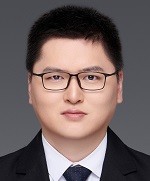
Assoc. Prof. Limeng Dong
Northwestern
Polytechnical University, China
Speech Title: STAR-RIS aided cell-free cognitive radio combined IoT networks: an efficient transmission scheme under insufficient power supply at RIS
Abstract: To meet the massive data communication needs of 6G in the future, simultaneous transmitting and reflecting reconfigurable intelligent surface (STAR-RIS) draws great attentions in the acdemic and history. Different form conventional RIS, STAR-RIS is capable of providing full-space signal coverage, and the quality of users’ data transmission can be significantly improved by properly design the amplitude and phase in each electromagnetic element (EM) of RIS. Although STAR-RIS is a quasi passive device with wide application value in various types of wireless networks, most studies have not considered its power consumption issue. Once the power supply of RIS decreases due to external factors, it cannot support the normal operation of all EMs, resulting in a decrease in the improvement of user data communication performance. Hence, in this lecture, we consider a STAR-RIS enabled cell-free cognitive radio combined IoT network, and set the extreme scenario of insufficient power supply for RIS. In order to effectively improve the communication rate of primary and secondary users in the network, an effective system resource allocation algorithm under different channel state information conditions. In particular, a scheme based on optimal EM selection was proposed for RIS. Simulation experiments have verified that the algorithm can still effectively improve data communication performance compared to existing solutions under this special case of insufficient power.
Biography: Limeng Dong, Associate Professor at the School of Electronics and Information Technology, Northwestern Polytechnical University. He Obtained bachelor's, master's, and doctoral degrees from the School of Electronics and Information Technology at Northwestern Polytechnical University in 2012, 2015, and 2019, respectively. From 2015 to 2017, he was an visiting doctoral student at the School of Electrical Engineering and Computer Science at the University of Ottawa in Canada. From 2019 to 2021, working as a postdoctoral researcher at the School of Information and Communication Engineering, Xi'an Jiaotong University. In 2024 and 2025, he was continuously selected for the list of "World’s Top 2% Scientists", which was jointly released by Stanford University and Elsevier in the United States. His main research directions are multi-antenna wireless physical layer security, cognitive radio communication technology, cell-free massive MIMO network technology, and reconfigurable intelligent surface assisted wireless communication theory.